A pan_mundial project · In development

posta

posta — wordmark

Argentinian slang for «really», «no kidding» — «¿Posta?» – «Posta.»

Argentinian Spanish,
the way it actually sounds.

In Buenos Aires it is not ¿Cómo estás? but ¿Cómo andás?. Not tú tienes but vos tenés. Anyone who learnt Spanish with one of the big language apps notices this within the first quarter of an hour at Ezeiza airport. posta is a web app for exactly this gap — Rioplatense, the Spanish of Buenos Aires, taught from German. A solo build, from product definition to operation.

Rioplatense Web app (PWA) In development

Three things that fall through the cracks.

No streaks, no points, no red counters.

«Nothing counts that isn't learning» — that is the principle in the architecture document, and it is carried through. The home screen shows how long today's session takes and what is in it. No number answers how good you are.

Your learning state lives locally in the browser, not on a server — the app works fully in flight mode, from lessons to lexicon. An account is optional and only serves to sync between two devices; without one you lose no functionality.

Repetition follows the research: spaced repetition with FSRS, tracked separately per expression for whether you understand it or can say it yourself. The daily plan is built fresh every morning from your own learning state. And accessibility is an acceptance criterion, not an afterthought: every screen is automatically checked against WCAG 2.1 AA, with font-size and contrast settings in the app.

Craft behind the scenes: lessons and vocabulary live as validated data, not code — a custom checker raises the alarm if a slips into an Argentinian dialogue. Around 500 audio clips with Argentinian voices come from a dedicated audio pipeline. On start, the app deliberately loads a capped 180 KB of JavaScript.
Paper and ink, one accent in celeste.

Six views of the current development build — light and dark mode, and in between what it is all about: the daily plan without counters, the register profile and the Argentina mode with its three steps textbook → Buenos Aires → natural.

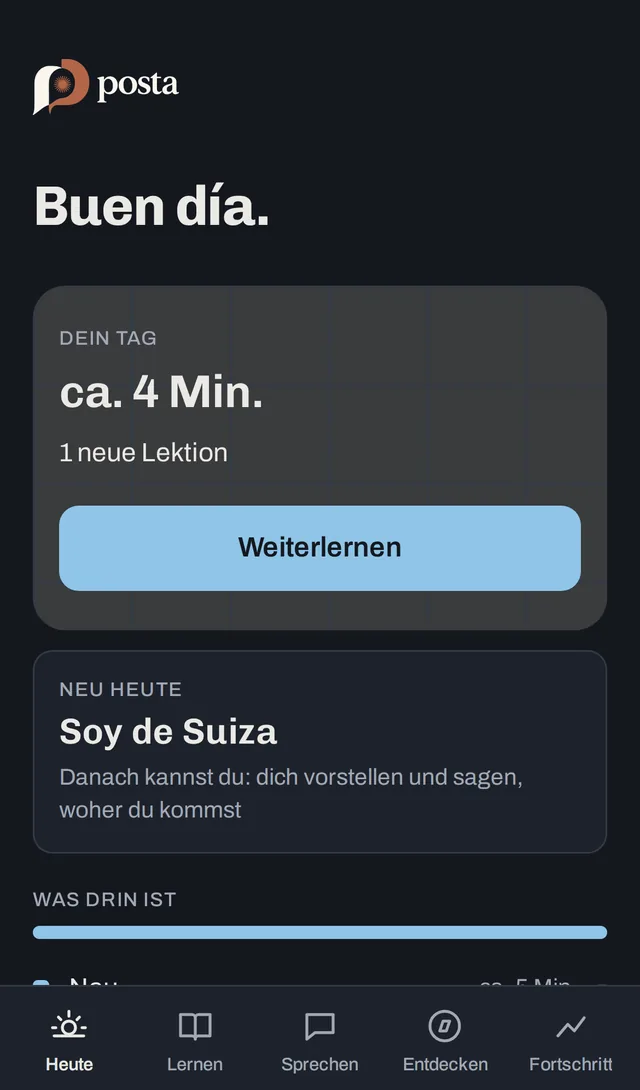
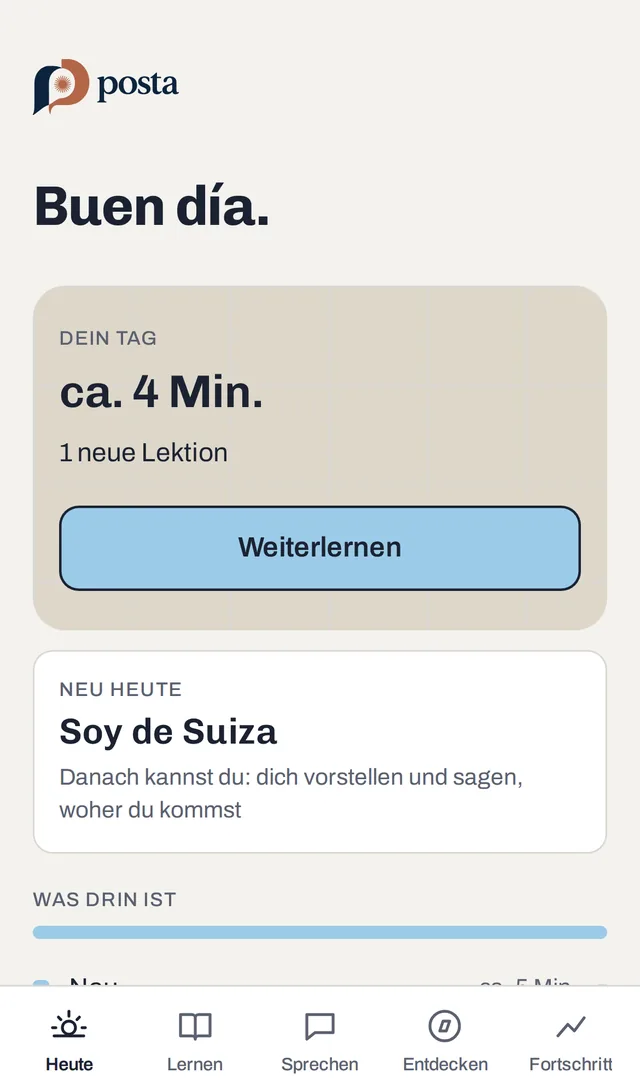
posta home screen «Today»: greeting Buen día, daily plan of about 4 minutes with one new lesson
Today: the day in minutes and content — no number tells you «how good» you are.
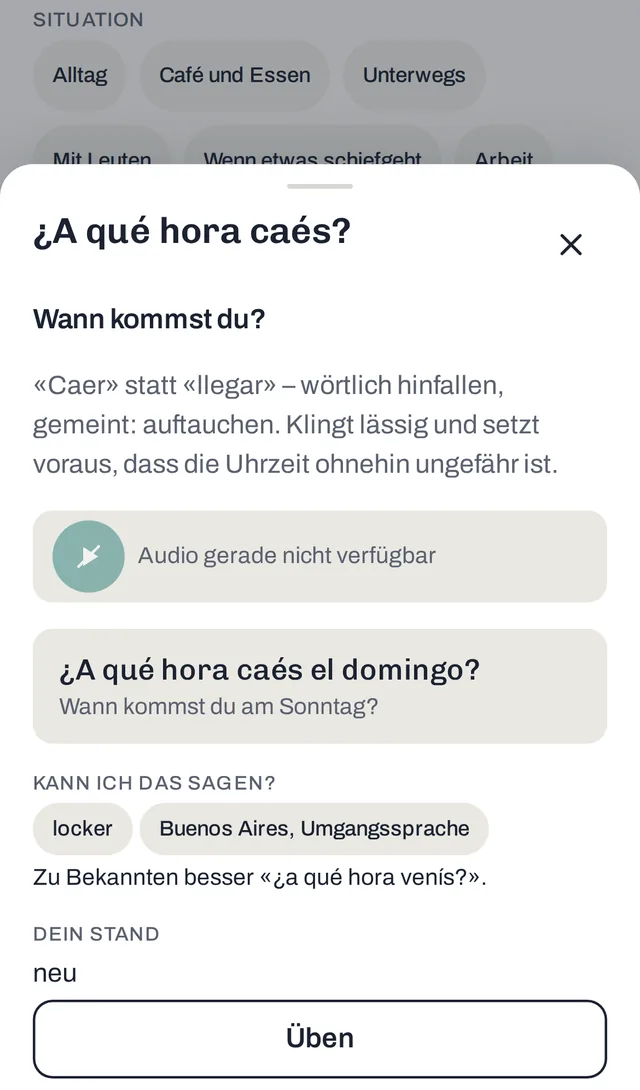
Expression sheet for ¿A qué hora caés? with explanation and the register profile «Can I say this?»
The register profile: casual, Buenos Aires, colloquial — and to whom better not.
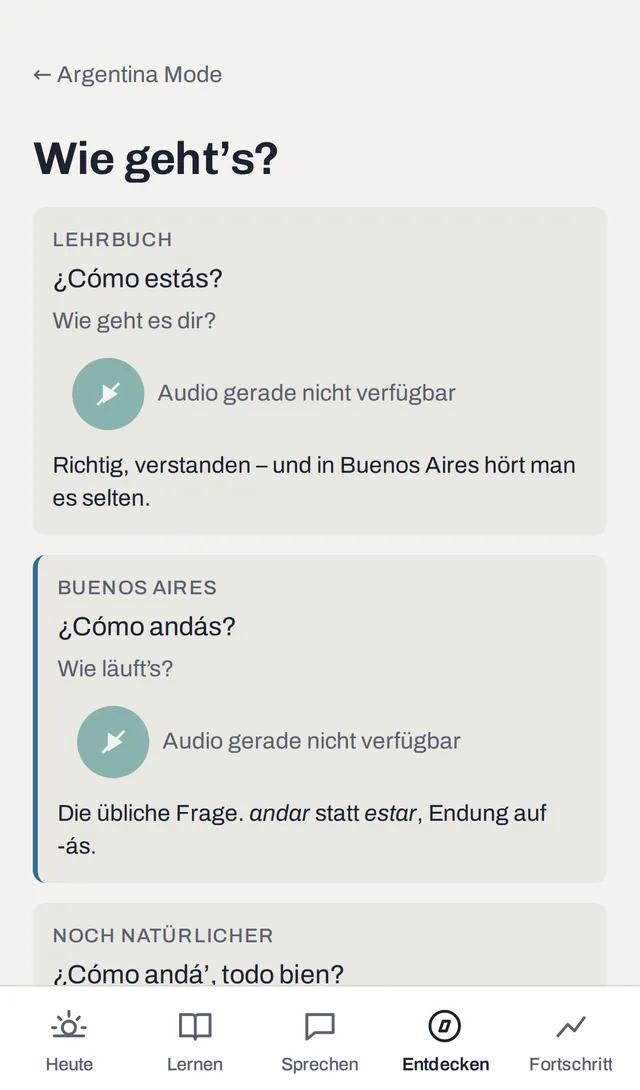
Argentina mode: ¿Cómo estás? as the textbook variant, ¿Cómo andás? as the Buenos Aires variant
Argentina mode: textbook → porteño → even more natural, sentence by sentence.
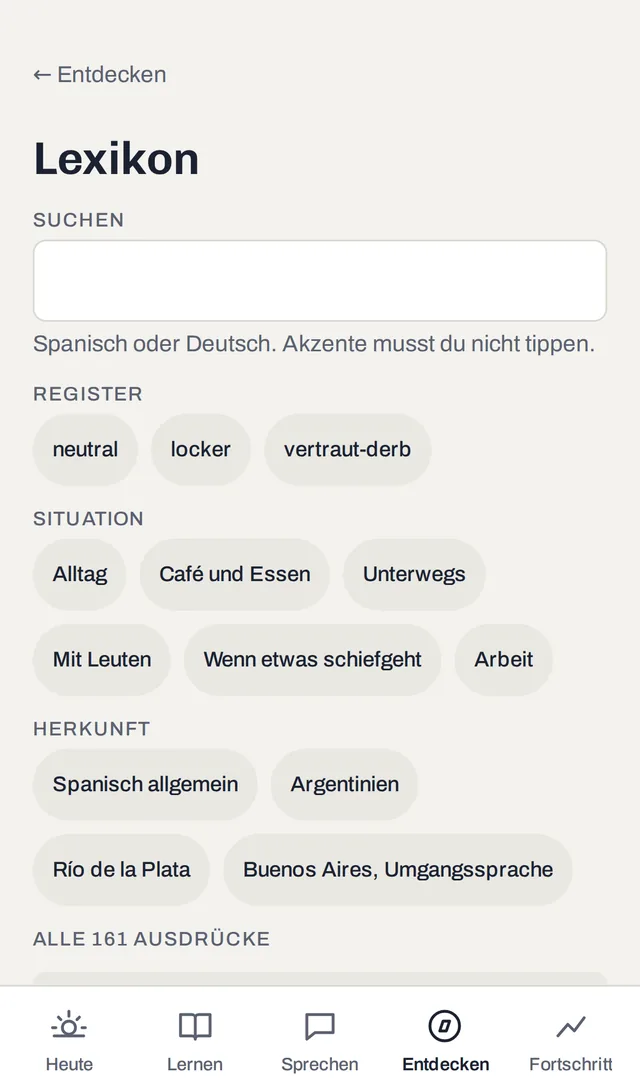
Lexicon with search and filters by register, situation and origin across 161 expressions
Lexicon: 161 expressions, filterable by register, situation and origin.
posta home screen in dark mode
Both modes from the start — the same calm, light or dark.
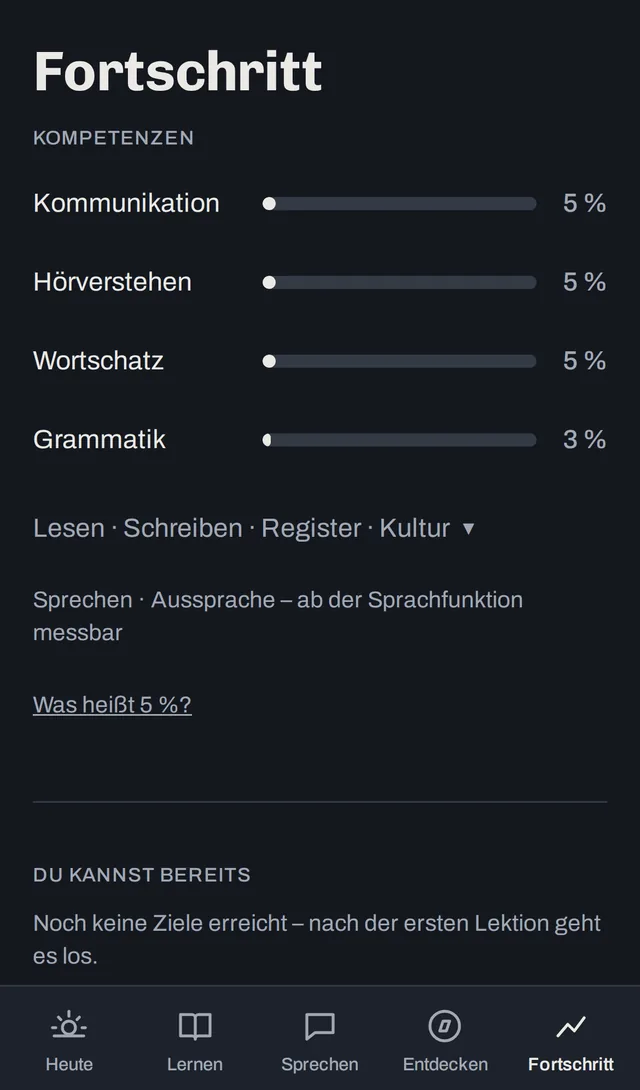
Progress view in dark mode: communication, listening, vocabulary and grammar at a few per cent
Progress as competences rather than points — honest even at 5%.

Screenshots from the current development build — details will still change. The app interface is in German.

In development
Built and tested

4 units plus a voseo module with 20 lessons, 161 expressions with register profiles, 816 exercises across 10 exercise types, around 500 audio clips. Backed by 342 automated tests and 30 end-to-end runs in two browser engines.

Still open before release 1.0

Part of the audio clips, the review of the content by native speakers (planned, not yet carried out) and acceptance on real devices. Until then the app deliberately stays private and is therefore not yet linked here.

Planned, not yet built

A scenario conversation with a language model and pronunciation feedback are on the roadmap — neither exists today. Nothing in posta currently holds a conversation.

The tech in one line: TypeScript, React and an independently tested learning engine; optional data sync via a database in Frankfurt; automated checks and deployment on every build.

¿Me traés la cuenta, por favor?
Could you bring me the bill, please? — That is how Buenos Aires sounds.

Interested in the project? Get in touch via pan_mundial.